Calligraphy study


Landscape study


Figures study
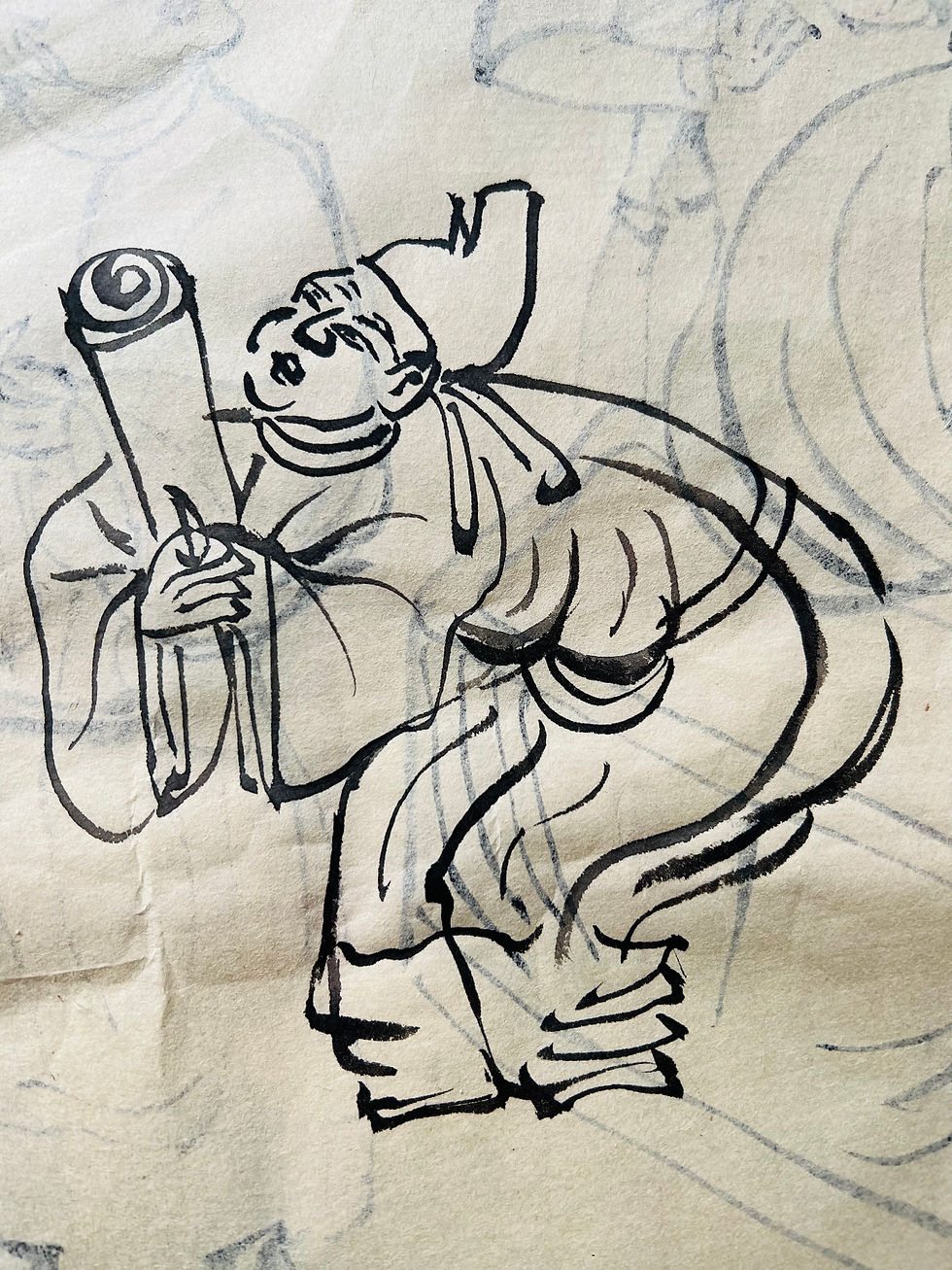
The Buddhist figures in the Mogao Caves along the Silk Road, during the Sui Dynasty. (a historical period in China from 581 to 618 AD)
Buddhist figures, Sui Dynasty, ink and wash on the Rice paper


The Mogao Caves, also known as the Caves of the Thousand Buddhas, are a remarkable treasure trove of Buddhist art. These caves, carved into the cliffs above the Dachuan River in the southeastern part of Dunhuang, Gansu Province, China, represent one of the largest, most resource-rich, and longest-used repositories of Buddhist art in the world. Initially established in 366 AD, they showcase great achievements in Buddhist art from the 4th to the 14th century. The surviving 492 caves contain approximately 45,000 square meters of murals and over 2,000 painted sculptures.
Among these caves, the ones from the Sui Dynasty (隋朝) (specifically Cave 302) depict some of the oldest and most vivid cultural exchange scenes along the Silk Road. One notable mural portrays a typical scene of a camel pulling a merchant caravan during that era. Additionally, caves from the Tang Dynasty (唐代) (such as Caves 23 and 156) depict workers in the fields and warriors. In Cave 61 from the Song Dynasty (宋朝), the famous landscape of Mount Wutai (五台山) serves as an early example of detailed cartography, including mountains, rivers, cities, temples, roads, and even caravans.
The Mogao Caves provide unparalleled historical value as evidence of the evolution of Buddhist art in northwest China. These artworks offer rich and vivid materials that depict various aspects of medieval politics, economy, culture, art, religion, ethnic relations, and daily attire in the western regions of China.
The unique artistic style of Dunhuang art continues to captivate visitors and scholars alike.


Drawing on the traditional fan


Sketch for Practice